









Signed for printing 30.09.2024

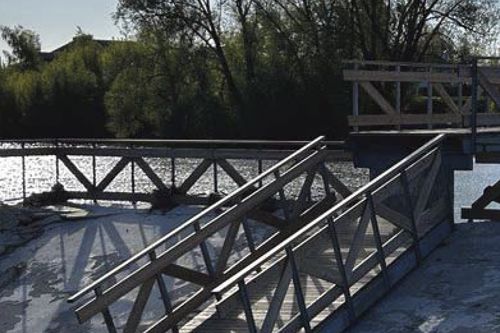
This year, everyone (both ordinary residents and specialized experts) have noted an alarming pattern. In a relatively short period of time, several dams have been washed away. At that, some of them were quite large and important for their regions. What was the reason for this? Evgeniy Bibin, the deputy head of the Department of State Energy Supervision of the Federal Service for Environmental, Technological and Nuclear Supervision told the editorial staff of the “Geoinfo” journal about who owns hydraulic structures, what happens to the objects that have no owners, and how to reduce the number of accidents.
The year 2024 pretends to be the year of floods. In the spring, high waters destroyed hydraulic structures in several regions of the Urals and Western Siberia. The city of Orsk in the Orenburg region suffered the most. In the summer, four disasters occurred in two weeks in Karelia, Buryatia, the Chelyabinsk Region and the Primorye Territory. Ones considered that the causes of those accidents were: prolonged atmospheric precipitations, rodent activities, incorrect high water assessments, design errors, subversive actions, operating rule violations, construction volume violations (when everything had been done according to documents, but in fact had not), substandard or incorrect materials. Anatoliy Bulgakov, an entrepreneur and expert in the fields of water supply and sanitation from Belgorod, believes that all of those are private causes of accidents, and the main one is the total degradation of the construction industry. The editorial staff of the “Geolnfo” journal invited him to justify his opinio and to tell what experts are facing, what needs to be done so that the water stops demolishing everything in its path.
The Ministry of Construction of Russia is controlling the restoration of the housing and infrastructure in Orsk, which suffered the most from the spring flood in 2024. Photo reports are regularly published on the Department’s web pages. In total, almost 29.5 thousand residential spaces in apartment and private houses were observed in the Orenburg region. Funds were allocated from the federal budget to repair 60 housing and communal services facilities, 26.5 km of roads, 3 land improvement facilities, and a dam in Orsk. But the floods, which happened during the spring high water in rivers in the Urals and Western Siberia, were not limited to. In the summer, four more disasters occurred one after another within two weeks (in the Chelyabinsk region, Karelia, Buryatia, and Primorye Territory). The scenarios were similar. First, a natural phenomenon (rain or flood) happened, then an accident occurred at a hydraulic structure, then a sharp rise in water occurred, which led to the rapid destruction of residential, civil and industrial facilities. All of that was emotionally enhanced by publications in the media and eyewitness’ accounts on social networks. The final was the search for the guilty ones and work with the dissatisfied population, because compensations did not cover the losses. In this article, we will recall the details of five sensational events of such kind, reflect on their causes and provide some experts’ opinions.
The publishing house of the “Geoinfo” journal has prepared for printing the book “Mathematical models of grounds for engineers” (by
The editorial staff of the “Geoinfo” journal drew attention to the increase in the number of announced events dedicated to the digitalization of construction, as well as to domestic and imported software. Someone sums up the results of the withdrawal of major foreign vendors from Russia two years ago, and someone prepares for new sanctions against the IT sector in the Russian Federation in September 2024. New sanctions mean that the access to cloud datastores will be closed, maintenance and support will stop, the access to familiar services will become more difficult and expensive. Even a paid license will not save you from this. Meanwhile, a draft law on charging additional deductions from companies for using foreign software is being prepared for consideration in the State Duma of the Russian Federation. On the eve of the big conference of the “Geoinfo” journal dedicated to automation and digitalization of engineering-geological surveys, in this article we will talk about how to orientate oneself in the digitalization activities of the construction industry and about what was discussed at the expert session of the Moscow Confederation of Industrialists and Entrepreneurs.
We present a slightly abridged and adapted translation of the paper “Numerical simulation of thawing process in frozen soil” by Chinese researchers (Yan et al., 2020). It was published in the peer-reviewed journal “Geofluids” by the Hindawi publishing company. It is an open access article under the CC BY license that allows it to be distributed, translated, adapted, and supplemented, provided that the types of changes are noted and the original source is referred to. In our case, the full reference to the original paper (Yan et al., 2020) used for the presented translation is given in the end. Permafrost has been thawing faster due to climate change, which would release greenhouse gases, change the hydrological regimes, affect buildings above, and so on. It is necessary to study the thawing process of frozen soil. A water-heat coupling model for frozen soil thawing is established on Darcy’s law and Heat Transfer in Porous Media interfaces in Comsol Multiphysics 5.5. Three curves of total liquid water volume, minimum temperature, and total heat flux in the thawing process are obtained from the numerical simulation. The distributions of liquid water, temperature, and pressure based on time are simulated too. The liquid water distribution is consistent with the total liquid water volume curve. The temperature distribution is confirmed by the minimum temperature and total heat flux curve. The pressure distribution represents ice in the frozen soil that generates negative pressure during the melting process. The numerical simulation research in this article deepens the understanding of the internal evolution in the process of frozen soil thawing and has a certain reference value for subsequent experimental research and related applications.
Simple shear tests have been used abroad during 60 years, but they are practically unknown in the Russian Federation. Nevertheless, GOST R 56353- 2022 provides for the possibility of conducting simple shear tests in dynamic mode, which allows replacing more complex and expensive tests in triaxial compression devices. This paper discusses the basic principles of simple shear testing, the device structures proposed by various researchers. Special attention is paid to the dynamic simple shear device developed by “NPP Geotech” LLC. In addition, the paper describes a detailed procedure of conducting such tests and interpreting their results.
The publishing house of the “Geoinfo” journal has prepared for printing the book “Mathematical models of grounds for engineers” (by
The publishing house of the “Geoinfo” journal has prepared for printing the book “Mathematical models of grounds for engineers” (by
 наверх


 Поделиться

 Поделиться
 Скопировать ссылку








 Оформить подписку