








Signed for printing 30.09.2025

We present to the readers an adapted translation of the article “The application of artificial intelligence in geotechnical investigation” by Chinese researchers. This work was published electronically in the collection of scientific papers “Advances in Artificial Intelligence, Big Data and Algorithms” by the international publisher “IOS Press”. It is available in open access under the CC BY-NC 4.0 license, which allows copying and redistribution of the article, adaptation, modification, and creation of new works based on it, but not for commercial purposes, provided that the license type, changes made are indicated and the original source is referenced. In our case, the full reference to the original source is provided at the end of the translation.
We bring to the attention of our readers a slightly abridged and adapted translation of the report by primarily Indian geological and geotechnical engineers “Digging deeper: the role of big data analytics in geotechnical investigations” (Vani et al., 2024), which was presented at the 3rd International Conference on Civil, Structural and Environmental Engineering (ICS-MEE) held on 2–3 May 2024 in the Indian city of Kottayam, Kerala. That event was organized by the Mangalam College of Engineering, received financial support from the Ministry of Science and Technology of India, and gathered more than 1,000 participants from all over the world. In the same year, the proceedings of that conference were published in peer-reviewed conference proceedings series “E3S Web of Conferences” issued by the French publishing house “EDP Sciences” (“Edition Diffusion Presse Sciences”). The paper on the basis of that report by Indian specialists is available in open access under the CC BY 4.0 license that allows it to be distributed, translated, adapted, and supplemented, provided that the types of changes, original source, and DOI are noted. In our case, the full reference to the original paper (Chen et al., 2020), which was used for the presented translation, is given in the end.
We present to the readers a slightly abridged and adapted translation of the article “Expedite quantification of landslides using wireless sensors and artificial intelligence for data controlling practices” by Indian and Saudi Arabian researchers. This work was published in the peer-reviewed journal “Computational Intelligence and Neuroscience” by the Hindawi Publishing Corporation under the CC BY 4.0 license. This license permits copying and distributing the article in any medium and format, adapting, modifying, and creating new works based on it for any purpose, including commercial use, provided that the original source is referenced. In our case, the full reference to the original source is provided at the end of the translation.
This paper by our special correspondents, who are also employees of a major development company, addresses a long-standing problem: attempts to save money on engineering surveys and the lack of proper quality control by investors inevitably lead to significant project cost increases. Based on the analysis of case studies from various regions, the authors demonstrate that a reasonable increase in survey costs can pay off many times over through accurate work volume estimation and the prevention of potential risks. The key to quality is not a high price by itself, but a well-prepared technical assignment, the selection of reliable contractors, and strict quality control of survey results, the main criteria for which are their validity, required level of detail, and alignment with project needs.
On September 17, 2025, a round table titled “On the Preservation and Use of Small Rivers under Low-Water Conditions” was held in Rostov-on-Don. The event was organized by the Southern Federal University (SFedU) and the Ministry of Natural Resources and Environment of the Rostov Region. Participants included scientists from SFedU and the Southern Scientific Center of the Russian Academy of Sciences (SSC RAS), other experts in hydrology, ecology, and climatology, as well as representatives of the authorities of the Rostov Region, the Luhansk and Donetsk People’s Republics, and relevant specialized agencies.
Researchers from the SSC RAS and the Institute of Earth Sciences of SFedU presented their ongoing studies of water bodies in the Rostov Region and the Azov area.
According to Andrey Kuznetsov, director of the Institute of Earth Sciences and moderator of the round table, low-water periods are cyclical. Previously, they lasted 10–15 years, but the current low-water period has already continued for 20 years. This situation is influenced by climate change and human economic activity.
Small rivers that are drying up, the shallowing of major rivers such as the Don and Kuban, and the conditions of the Taganrog Bay and the entire Sea of Azov are being constantly monitored by scientists. Experts are seeking explanations for the causes of low-water conditions and are generating ideas for possible solutions. To implement their proposals, the involvement of government representatives, who are responsible for financial resources, is essential. It was for this purpose that the above-mentioned round table was organized.
“We need recommendations from the scientific community concerning water resources in order to ensure both short-term and long-term planning. We are constrained by budget limits and must spend the allocated funds rationally,” commented Mikhail Fishkin, Minister of Natural Resources and Environment of the Rostov Region.
This article covers: the research conducted by scientists in the Rostov Region, the Krasnodar Territory, and other parts of the Azov area; forecasts of climate and river flow changes up to 2054; similarities and differences between three climate scenarios; why it is not always appropriate to clean all small rivers despite environmental activists’ demands; and why some proposals voiced by regional and federal officials may be questionable.
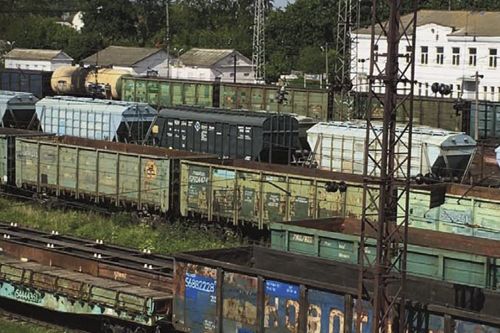
The article examines the structure, systematics, and diversity of ecologicalgeological systems of transport-and-communication complexes – some of the most important components of the technosphere, which perform the functions of transporting various goods and people, conveying mineral resources, and transmitting energy and information, and which are considered a specific type of ecosystems. The paper analyzes the characteristic ecological-geological features of their abiotic and biotic components, as well as the interrelations between them, which must be taken into account during environmental engineering surveys and investigations conducted in areas where transport-and-communication complexes are located.
This article presents an overview of modern methods for using video logging (TV logging) to study karst formations and assess the karst hazard of areas. It examines the technical aspects of video logging, its advantages, and limitations in exploring karst cavities. The paper also presents practical experience in using this method to assess karst hazards in the central part of Kazan. It is shown that video logging in karst-prone areas makes it possible to assess the condition of а soil body, identify the location and dimensions of cavities more accurately, which contributes to improving the safety of construction and operation of engineering structures.
Organic matter present in soils includes both organic residues that have partially preserved their original structure and individual organic compounds of a specific and non-specific nature. In agricultural reclamation, complete fractionation of organic substances is carried out, whereas for geotechnical purposes, only the total organic content is essential. This is an important classification feature; therefore, the methodology for determining organic matter in soils is given increased attention. However, while in soil science the new editions of GOST standards remain within the framework of classical methods recognized by the scientific community, in engineering and geological surveys, and subsequently in soil science, there is a clear tendency to simplified definitions related mainly to pyrolysis of organics at different temperatures. Is it any wonder that as a result of such manipulations, new lithological types of soils such as “peaty marl” appear?
 наверх


 Поделиться

 Поделиться
 Скопировать ссылку










 Оформить подписку