









Signed for printing 16.06.2025

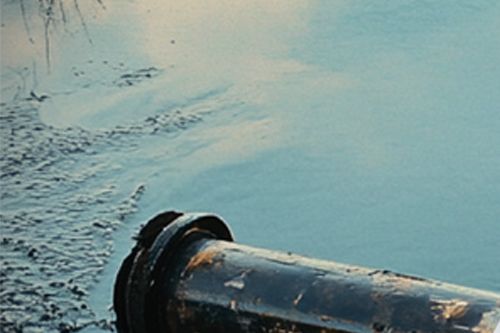
This article discusses modern methods of cleaning away oil pollution from geological environment along oil pipeline routes, including in the Siberian and cryolithozone conditions. A rational scheme for cleaning grounds off oil pollution is given. The analyzed methods can be considered as general for solving similar problems not only in Russia, but also in the Chinese People's Republic. And they should be taken into account during engineering-environmental surveys and studies in polluted areas, too.
The paper considers the development of the layer-by-layer summation method, which makes it possible to calculate settlements taking into account nonlinear deformation without using numerical methods. This method is based on the proposal of Z.G. Ter-Martirosyan on taking into account the shear and volumetric components of deformation using, respectively, the shear modulus and the volumetric compression modulus for the calculation by the layer-by-layer summation method.
: The density and sizes of surface manifestations of karst, karst-suffusion and suffusion (not related to karst) processes are the necessary information for zoning territories according to hazard categories. For natural areas, that are little affected by human activities, the task is only to find depressions. In a territory, which is characterized by a rich history and lack of modern construction and agricultural activities, it is relevant to determine the origin of the detected drainless depressions, because people have greatly change the landscape over the centuries of their residence (not always peaceful). At the same time, determining the origin of a relief form on the basis of morphometric analysis is not always effective.
North-Eastern Transbaikalia is a vast mid-mountain region situated in the southern part of Siberia to the north and east of Lake Baikal. This region is located at the junction of two large lithospheric structures (the Baikal rift system and the Siberian craton) and is characterized by high tectonic activity and seismicity (with magnitudes up to 8.0) and by contrasting relief. The climate of the region is sharply continental with severe long winters and moderately warm summers. The location of mountain ranges contributes to the penetration of cold arctic air masses. Regarding geology, the territory under consideration is located within the Angara-Vitim granitoid arealpluton. The severity climate, heigh and dissected relief, variegated composition and fracturing of soils and rocks, vertical and horizontal mobility of blocks of the Earth crust in the region have caused intensive development of processes of old and modern weathering (the last has been both areal and linear along faults and fracture zones). Intensive weathering as a characteristic feature of the region leads to the fact that the granitoids masses decompose into gruss and sand at once, without giving intermediate products of destruction such as blocks and crushed stone. This article presents the results of studying granitoids masses in the NorthEastern Transbaikalia.
We present a slightly abridged and adapted translation of the long paper “Modelling and mapping climate change impacts on permafrost at high spatial resolution for a region with complex terrain” written by a group of Canadian and Chineze researchers (Zhang et al., 2013). It was published in 2013 in the “The Cryosphere” journal. It is an open access paper under the CC BY 3.0 license that allows it to be distributed, translated, adapted, and supplemented, provided that the types of changes are noted and the original source is referred to. In our case, the full reference to the original paper (Zhang et al., 2013), which was used for the presented translation, is given in the end.
We present a slightly abridged and adapted translation of the paper “Key technologies for improving resilience of super-large diameter shield tunnel affected by large variable loads underneath the Yellow River” by Jiang Chen, Chinese geotechnician (Chen, 2024). It was published in 2024 in the journal “Earth and Environmental Science” by the publishing company of the British scientific society “Institute of Physics” (IOP) that is now virtually international. It is an open access paper under the CC BY 3.0 license that allows it to be distributed, translated, adapted, and supplemented, provided that the types of changes are noted and the original source is referred to. In our case, the full reference to the original paper (Chen, 2024), which was used for the presented translation, is given in the end.
We have long been concerned about the question: is it really economical to build facilities (including ones financed by the state budget), maximally reducing all the production cycles in attempts to outpace inflation? Is it possible to implement a project effectively without taking into account the opinions of engineering geologists and ecologists? In our opinion (that is supported by the experience of specialists), it is impossible. Ignoring (and often just non-acquaintance and misunderstanding) of the costs of geological, environmental and engineering-geological risks inevitably prolongs the implementation period of a project, violating the very idea of maximal reduction of construction time. Facilities built in this way inevitably bring problems instead of satisfaction. Landslides, avalanches, mudflows occur on the roads; the roads become covered with in bumps and holes; houses, bridge supports and overpasses become tilted. As a result, money from the federal budget is not only spent on correcting the situation, but also labor forces are restrained instead of being involved in some new construction, and not to mention the general disappointment of the population. And it is all aggravated by the fact that the engineering survey industry (which employs up to half a million people) has not yet been officially recognized as an independent industry (for it, there has not yet been a separate code according to the All-Russian Classifier of Economic Activities), so it is so underfunded that it is getting closer and closer to the brink of extinction.
In January 2025, Ayrat Islamgalievich Latypov, scientific director of “KazGeoLab” LLC, was awarded the scientific degree of Doctor of Science (Geology and Mineralogy) in the specialty “Engineering Geology, Geocryology and Soil Science”. His scientific work was devoted to the structure and engineering-geological features of eluvial soil strata in Eastern Trans-Kama (Tatarstan). This is a dynamically developing industrial region that at the same time is characterized by difficult engineering-geological conditions and is poorly studied in geotechnical terms.
This paper is devoted to the consideration of various geophysical methods used in engineering-geological surveys, as well as to the features of interpreting their results and their influence on the choice of design solutions.
Recently, the journal “Geoinfo
 наверх


 Поделиться

 Поделиться
 Скопировать ссылку













 Оформить подписку